
Total Knee Arthroplasty is a common orthopedic procedure used when chronic knee damage significantly limits daily life. The knee is a major weight-bearing joint, and long-term stress, injury, or disease can lead to persistent pain and reduced mobility. Most conditions respond to conservative care, but some may require surgical evaluation. This article outlines key conditions that may lead to Total Knee Arthroplasty and other possible causes of chronic knee pain.
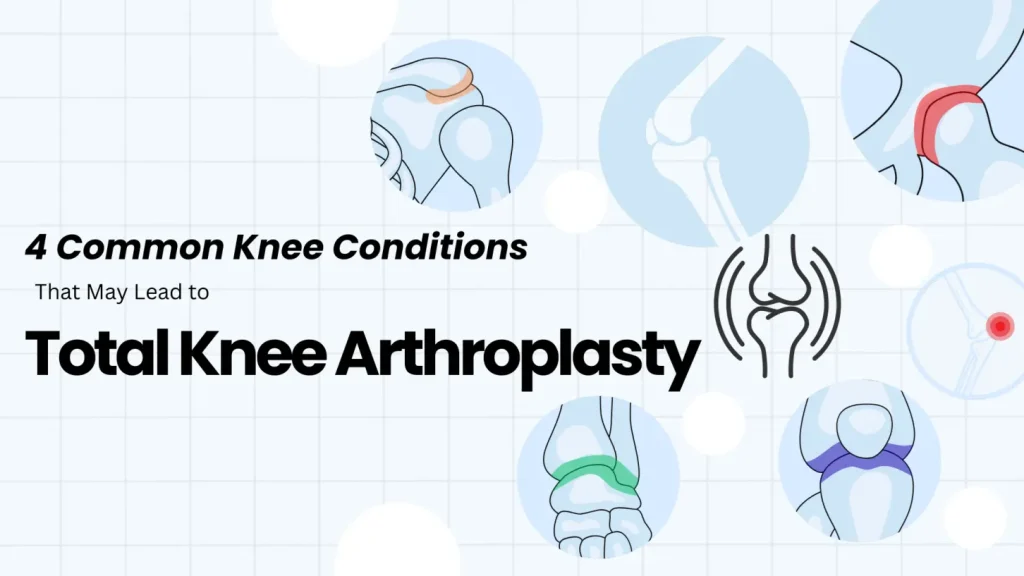
Total Knee Arthroplasty, also known as Total Knee Replacement, is a surgical procedure that replaces damaged cartilage and bone in the knee joint with artificial components.
Key points:
Clinical data from orthopedic guidelines show that Total Knee Arthroplasty provides significant pain relief in 85-90% of appropriately selected patients, with prosthesis survival often exceeding 15 years[1,2].
Total Knee Arthroplasty is not the first-line treatment. It is considered when structural damage becomes severe, and symptoms persist.
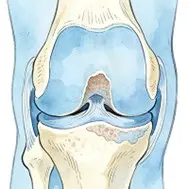
Knee Osteoarthritis is the most common reason for Total Knee Arthroplasty.
Epidemiological data show that knee osteoarthritis affects 365 million people worldwide[3]. In severe cases, Total Knee Arthroplasty may be considered when conservative treatments no longer provide adequate relief.

Includes rheumatoid arthritis and ankylosing spondylitis.
Modern biologic therapies reduce progression, but some patients still reach stages where Total Knee Arthroplasty may be evaluated.

Develops after a knee injury.
Patients with prior anterior cruciate ligament injury or tibial plateau fracture have a higher long-term risk of knee replacement surgery.
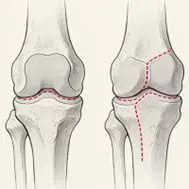
Refers to abnormal knee alignment.
Severe deformities may require Total Knee Arthroplasty to restore mechanical alignment and balance soft tissues.
Not all knee pain leads to Total Knee Arthroplasty. Many conditions contribute to chronic symptoms:
These conditions should be carefully evaluated before considering total knee replacement.
Patients with the following symptoms should seek evaluation:
Total Knee Arthroplasty is typically considered only after non-surgical options fail and imaging confirms severe joint damage.
For patients and families exploring treatment options for chronic knee conditions or seeking further evaluation to determine whether Total Knee Arthroplasty may be appropriate, SunMoon can help international patients understand treatment pathways and connect with orthopedic evaluation services.
Patients can receive personalized support throughout the evaluation and treatment process. For more information, please visit the SunMoon official website or contact our team directly.
References:
[1] Yiming, X., Mingwei, H., Wei, Z., Muyang, Y., Jin, L., Jin, J., Wenwei, Q., Bin, F., & Xisheng, W. (2025). Over 20-year follow-up result of total knee arthroplasty for knee arthropathy: a single center cohort study. DOAJ (DOAJ: Directory of Open Access Journals). https://doi.org/10.12290/xhyxzz.2024-1090
[2] Woodland, N., Takla, A., Estee, M. M., Franks, A., Bhurani, M., Liew, S., Cicuttini, F. M., & Wang, Y. (2023). Patient-Reported Outcomes following Total Knee Replacement in Patients Aged 65 Years and Over—A Systematic Review. Journal of Clinical Medicine, 12(4), 1613. https://doi.org/10.3390/jcm12041613
[3] World Health Organization: WHO & World Health Organization: WHO. (2023, July 14). Osteoarthritis. https://www.who.int/news-room/fact-sheets/detail/osteoarthritis