
Rising demand for orthopedic reconstruction has driven hospitals and surgical centers to refine their workflow efficiency and clinical precision. A well-structured total knee arthroplasty protocol plays a central role in improving surgical outcomes, standardizing procedures, and enhancing coordination between multidisciplinary teams.
For healthcare providers, distributors of medical technology, and hospital administrators, optimizing the total knee arthroplasty protocol is not only a clinical necessity but also a strategic advantage in improving patient satisfaction and operational efficiency.
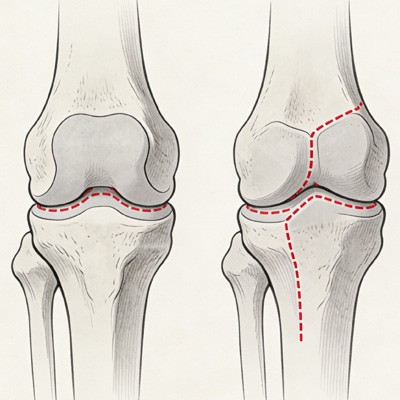
Improved Surgical Precision Through Structured Planning
One of the primary benefits of a standardized total knee arthroplasty protocol is improved surgical accuracy. Preoperative planning ensures that anatomical assessments, imaging data, and implant selection are carefully aligned before entering the operating room.
This structured approach reduces intraoperative uncertainty and enhances decision-making consistency. When a total knee arthroplasty protocol is properly implemented, surgeons are able to execute procedures with greater confidence, resulting in improved alignment and implant positioning.
For medical institutions, this also translates into fewer complications and more predictable postoperative outcomes, which is critical for maintaining institutional reputation and referral confidence.
Enhanced Collaboration Between Clinical and Engineering Teams
Modern orthopedic care increasingly relies on collaboration between surgeons and engineering specialists. Within an optimized total knee arthroplasty protocol, this partnership ensures that surgical planning is both clinically accurate and technically refined.
At leading med-engineering collaboration systems such as SunMoon Med-Engineering Integrated Precision Solution, the process is designed so that clinicians lead decision-making while engineers provide technical support. This ensures that the total knee arthroplasty protocol remains grounded in surgical expertise while benefiting from advanced computational and design tools.
Unlike traditional outsourced models, this integrated approach enables rapid refinement of surgical plans—often within one to two efficient iterations—without compromising precision or customization.
Operational Efficiency and Patient-Centered Outcomes
Another major advantage of a well-designed total knee arthroplasty protocol is improved operational efficiency. Streamlined workflows reduce preoperative delays, minimize communication gaps, and enhance coordination across surgical teams.
Patients benefit from shorter waiting times, more predictable surgical timelines, and improved recovery planning. From a business perspective, hospitals that adopt optimized total knee arthroplasty protocol systems can increase surgical throughput while maintaining high standards of care.
This balance between efficiency and quality is especially important in high-volume orthopedic centers, where resource optimization directly impacts financial and clinical performance.
Advancing Orthopedic Innovation Through Integrated Systems
As orthopedic surgery continues to evolve, institutions that adopt collaborative and technology-driven approaches will maintain a competitive advantage in the global healthcare market.
At SunMoon Stem Cells, we are committed to supporting advanced medical innovation through integrated regenerative and engineering solutions. Our approach emphasizes clinician-led decision-making, supported by engineering precision, ensuring that every total knee arthroplasty protocol is tailored to patient anatomy and surgical intent.
By combining medical expertise with med-engineering collaboration, we continue to support healthcare partners in delivering safer, faster, and more precise orthopedic outcomes worldwide.