
For orthopedic departments, hospital procurement committees, and business healthcare partners, clarity on surgical indications directly impacts referral pathways, operating room utilization, and patient outcomes. The total knee arthroplasty procedure represents one of modern medicine’s most successful interventions, but appropriate patient selection is critical to achieving satisfactory results. As a medical group integrating cutting-edge technology with traditional medicine, we recognize that understanding exactly which clinical problems this surgery addresses helps healthcare institutions develop rational treatment algorithms and avoid unnecessary procedures.
Advanced Osteoarthritis: The Primary Indication
The most common condition necessitating a total knee arthroplasty procedure is advanced primary osteoarthritis. This degenerative joint disease progressively erodes articular cartilage, leading to bone-on-bone contact, osteophyte formation, and subchondral sclerosis. Patients typically present with mechanical pain—worsened by weight-bearing activity and relieved by rest—along with morning stiffness lasting less than thirty minutes. Radiographic findings show joint space narrowing, often complete loss of cartilage in at least one compartment. When conservative measures including physical therapy, anti-inflammatory medications, corticosteroid injections, and viscosupplementation have failed to provide adequate relief for six months or more, the total knee arthroplasty procedure becomes the standard of care. Delaying surgery beyond this point risks muscle atrophy, flexion contractures, and diminished postoperative outcomes.
Inflammatory Arthritis and Post-Traumatic Destruction
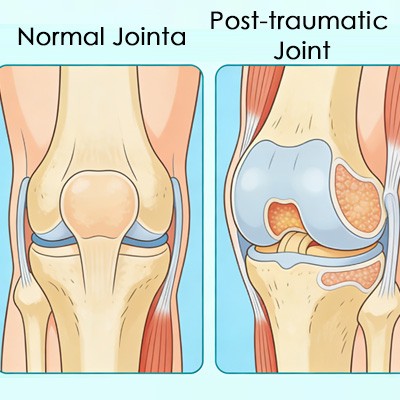
Beyond osteoarthritis, the total knee arthroplasty procedure effectively treats rheumatoid arthritis, psoriatic arthritis, and other inflammatory arthropathies. These systemic autoimmune conditions produce synovial proliferation (pannus) that erodes cartilage and bone, often in a symmetric and polyarticular pattern. Unlike osteoarthritis, inflammatory arthritis patients frequently experience significant morning stiffness lasting over one hour, constitutional symptoms, and extra-articular manifestations. Additionally, post-traumatic arthritis following tibial plateau fractures, femoral condyle fractures, or chronic anterior cruciate ligament deficiency represents another indication. Even with optimal fracture fixation, articular surface incongruity leads to accelerated wear. A total knee arthroplasty procedure in these patients requires careful attention to ligamentous stability and bone defects.
Severe Deformity and Avascular Necrosis
Varus (bow-legged) or valgus (knock-kneed) deformities exceeding 15 degrees, when associated with significant pain and functional limitation, warrant a total knee arthroplasty procedure. Such deformities arise from asymmetric cartilage loss, bone erosion, or prior osteotomies. The procedure restores mechanical alignment, redistributes loads, and relieves overloaded compartments. Additionally, avascular necrosis of the femoral condyles—often idiopathic or secondary to corticosteroid use, alcoholism, or sickle cell disease—produces subchondral collapse and secondary arthritis. When lesions are large or involve weight-bearing surfaces, the total knee arthroplasty procedure provides definitive management that joint-preserving techniques cannot achieve.
Optimizing Surgical Precision Without Excessive Costs
For business partners managing orthopedic service lines, delivering consistent outcomes for these indications requires balancing precision with cost-efficiency. SunMoon Stem Cells offers our Med-Engineering Integrated Precision Solution: cost revolution at 1/50 the cost of robotic surgery with the same clinical outcomes. Precision doesn’t have to mean expensive. While robotic systems often exceed USD 1 million in investment with high per-case costs, our PSI solution focuses on AI planning and 3D printing—around RMB 500 per case. Hospitals avoid costly equipment purchases, and patients benefit directly from savings—receiving world-class precision surgery at an affordable price. Reach out to discuss how our approach to the total knee arthroplasty procedure can strengthen your orthopedic service line while improving financial sustainability.