
Knee osteoarthritis is a common degenerative joint disease in which the cartilage that cushions the knee gradually breaks down. It can cause pain, stiffness, swelling, and reduced mobility. For many people, knee osteoarthritis starts as occasional discomfort, then becomes a daily limitation. Understanding its causes, stages, and treatment options helps patients make informed decisions before the condition becomes severe.
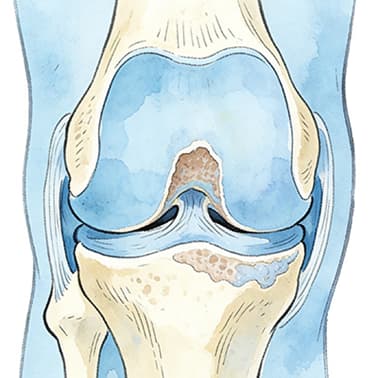
Knee osteoarthritis is a degenerative joint disease in which the cartilage that cushions the knee gradually breaks down. As the cartilage wears away, the joint loses smooth motion and may develop pain, swelling, stiffness, and reduced range of motion.
It is also one of the most common forms of arthritis. In the United States, arthritis affects millions of adults, and knee osteoarthritis is a major contributor to disability in older populations. This is why knee and joint health becomes more important with age and with other risk factors that increase joint load.
In daily life, knee osteoarthritis may affect walking, climbing stairs, squatting, standing for long periods, and sleep quality. Because the knee carries body weight, even small structural changes can create noticeable symptoms.
The osteoarthritis causes are usually multifactorial. Knee osteoarthritis often results from a combination of age, mechanical stress, prior injury, body weight, and biological factors.
1. Age
Age is one of the strongest risk factors. With time, cartilage repair capacity may decline, muscles may weaken, and joint tissues may become less resilient. However, knee osteoarthritis is not inevitable with age.
2. Sex
Women have a higher risk of knee osteoarthritis, especially after midlife. Hormonal changes, joint alignment, muscle strength, and bone structure may all contribute, although the mechanism is not explained by one factor alone.
3. Body Weight
Higher body weight increases mechanical load on the knee. It may also increase systemic inflammation. Weight management is often recommended as part of knee and joint health, especially for patients with pain during walking or stair climbing.
4. Joint Injury and Overuse
A prior meniscus tear, ligament injury, fracture, or repeated high-load activity can raise the risk of knee osteoarthritis. Occupational kneeling, heavy lifting, and repetitive squatting may also contribute in some patients.
5. Bone Density
Bone quality and bone remodeling may influence knee osteoarthritis. Subchondral bone changes can affect how force is transmitted across the joint. Research is still evolving, so bone density should be viewed as one possible factor rather than a single direct cause.
Typical symptoms of knee osteoarthritis include:
| Symptom | What patients may notice |
| Pain | Pain during walking, standing, climbing stairs, or after activity |
| Stiffness | Morning stiffness or stiffness after sitting |
| Swelling | A fuller or tight feeling around the knee |
| Crepitus | Grinding, clicking, or crackling during movement |
| Reduced motion | Difficulty bending or straightening the knee |
| Functional Weakness | Reduced confidence when walking or climbing stairs |
| Deformity | Bow-leg or knock-knee alignment in severe cases |
Common causes of knee swelling include osteoarthritis flare-ups, joint effusion, injury, inflammatory arthritis, infection, or gout. If swelling is sudden, hot, red, or linked with fever, medical evaluation is needed.
Symptoms do not always match X-ray severity. Some people with visible joint changes have mild pain, while others with less visible change may have significant symptoms. This is why knee osteoarthritis treatment should consider both imaging and daily function.
As a degenerative disease, knee osteoarthritis often follows a relatively predictable pattern. Progression may be slow or variable, but the general stages are commonly described from minor changes to severe joint damage.
| Treatment Level | Common Approach |
| Early stage | Education, exercise, weight control, symptom monitoring |
| Moderate stage | Add medication, injections, and supervised rehabilitation |
| Severe stage | Surgical evaluation, with TKA often considered for end-stage knee osteoarthritis |
Stage alone should not decide treatment. A clinician usually considers pain level, function, imaging, age, activity goals, medical history, and previous response to treatment.
Knee osteoarthritis treatment is usually stepwise. The goal is to reduce pain, preserve function, and match care to disease severity. Not every patient needs surgery, and not every non-surgical option works the same way for every patient.
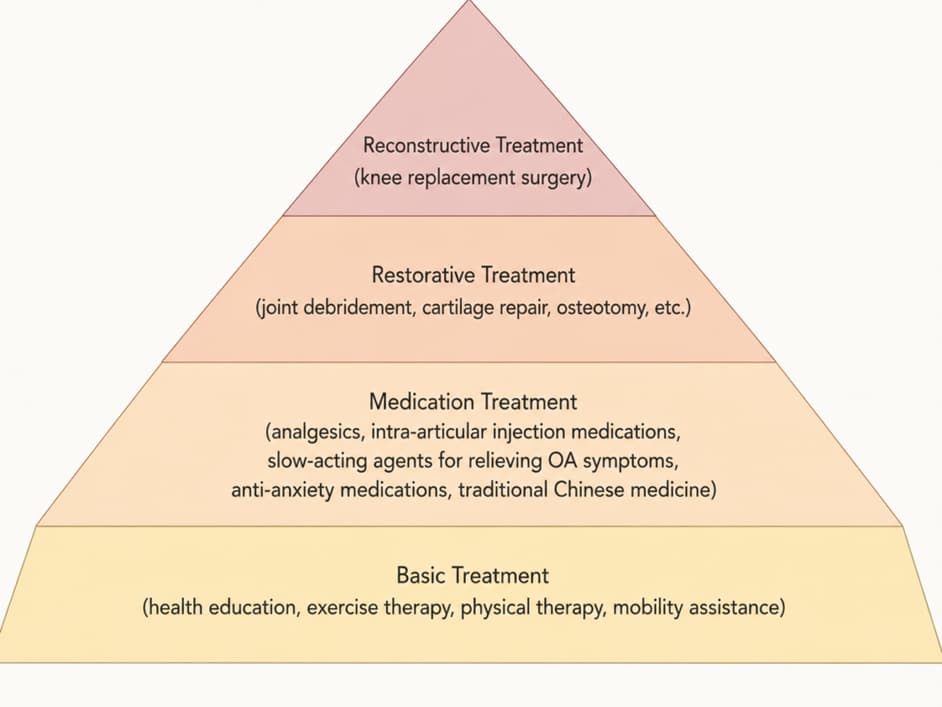
For early and moderate knee osteoarthritis, exercise therapy is strongly supported in clinical guidelines. Strengthening the quadriceps, improving hip control, and maintaining range of motion can support knee and joint health. Low-impact activities such as walking, cycling, and swimming are often used when tolerated.
Medications may help relieve symptoms, but they do not rebuild lost cartilage. Oral NSAIDs can reduce pain for some patients, but they may not be suitable for people with kidney disease, stomach ulcer risk, heart disease, or certain medications. Injections may be considered in selected cases, but results vary.
For severe, end-stage knee osteoarthritis, total knee arthroplasty is widely regarded as the gold standard surgical treatment when conservative care no longer provides acceptable relief. TKA replaces damaged joint surfaces with artificial components. The aim is pain reduction, improved alignment, and functional improvement, not guaranteed complete restoration of a natural knee.
Knee osteoarthritis is a common and progressive condition that can affect mobility and quality of life. Learning about its risk factors, symptoms, and stage-based treatment options can help patients make more informed decisions about knee health and overall joint health.
For patients with severe knee osteoarthritis who may need TKA, SunMoon helps patients connect with personalized expert care and surgical planning support.