
For patients and their families,
understanding the stem cell therapy success rate is one of the most pressing concerns. With traditional treatments
often falling short, more and more people are searching for a new source of
hope. So, what exactly is the stem cell therapy success rate? Can this
cutting-edge treatment truly help patients regain their health?
Thinking about the stem cell therapy success rate as a single number is misleading.
The outcome of stem cell treatment depends heavily on the specific disease, the type of cells used, the patient’s overall health, and the treatment plan itself.
It's more accurate to look at success as a range of potential improvements, from significant relief to full remission.
Let’s break down the success rates for some common conditions.
|
Condition |
Success Rate Range |
Key Success Factors |
|
Blood Cancers (Hematological) |
60–70% |
Donor matching, conditioning therapy |
|
Joint/Orthopedic Conditions |
70–80% |
Patient age, injury severity, cell dose |
|
Multiple Sclerosis |
Repeated mesenchymal stem cell (MSC) treatments have been proven safe in the short/medium term and can produce clinical benefits lasting up to 4 years (especially in patients receiving 2 or more injection treatments) |
Early intervention, immune suppression |
|
Autism Spectrum Disorder |
Patients showed significant improvements in social interaction, motor function, and behavioral skills. The most significant therapeutic effects were observed in “interpersonal relationships” and “physical functioning” aspects. |
Age at treatment, symptom severity |
|
Parkinson's Disease |
Multiple studies have shown improvements in motor symptoms such as walking, speaking, and facial expressions. |
Disease stage, dopamine cell viability |
|
Reproductive System Disorders |
MSCs show significant potential in treating Erectile Dysfunction caused by various factors and female infertility. |
Disease severity, immune modulation |
|
Diabetes, Neurological Damage, Liver Cirrhosis, Cardiovascular Diseases, etc. |
Multiple studies demonstrate that stem cell therapy shows tremendous potential and significant effects. |
Varies according to specific treatment solutions and individual patients |
Note: Stem cell therapy is a constantly evolving field, and the data provided is for reference only. However, clinical trials have already proven its restorative benefits and high efficacy.
The cost is a major consideration for many. To answer this, you have to weigh the financial investment against the potential for a better quality of life. When conventional treatments have failed, the possibility of reducing pain, regaining function, or slowing a chronic disease can be priceless. This is where a high stem cell therapy success rate becomes a truly transformative factor, offering a return on investment that goes far beyond a dollar amount.
While the benefits can be life-changing, it's also important to understand the risks. The good news is that most risks are linked to clinics that don't follow proper safety standards. Reputable clinics, like SunMoon, follow strict protocols to ensure every treatment is as safe as possible.
The most common risks include:
● Infection at the site of the injection.
● Immune rejection, which is very rare when using a patient's own (autologous) cells.
The single most important decision you can make to minimize these risks is to choose a qualified, trustworthy clinic. A well-established clinic with a strong track record and a high stem cell therapy success rate is a reliable sign of quality and safety.
Authentic success stories best illustrate the real-world results of SunMoon's stem cell therapy. At SunMoon, we've witnessed many remarkable transformations.
Before her treatment, Sofiia, a girl from Kyrgyzstan, was diagnosed with cerebral palsy (GMFCS Level V). This meant she couldn't independently control her head, sit, or stand. She also experienced global developmental delays, a lack of language, and poor fine motor skills.
Following stem cell therapy, Sofiia made significant progress. Her mood, appetite, and sleep all improved. Her cognitive abilities grew, allowing her to understand and respond more quickly. She started using more facial expressions and smiling socially. Her fine motor skills also got better—her grip was stronger, her hand-eye coordination improved, and she could walk for longer distances with assistance.

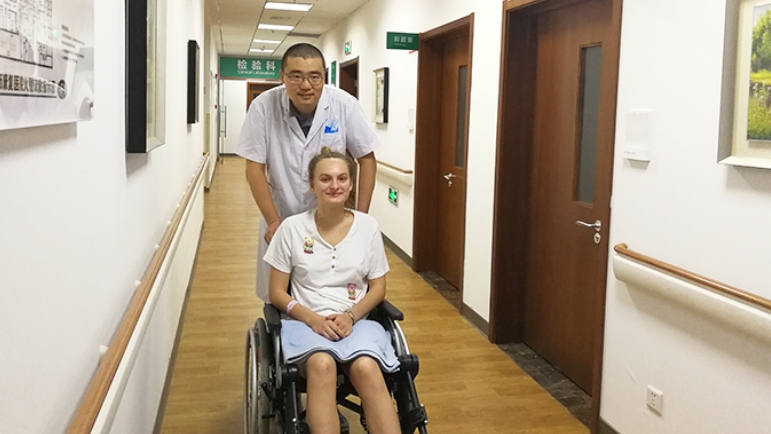
After a severe car accident caused a complete spinal cord injury (T5-T7), Alena lost all motor and sensory control below her chest. She couldn't lift her left arm, lacked the strength to sit up on her own, and couldn't move her body independently. She had no feeling in her legs and waist and couldn't even lie down from a sitting position by herself.
After two courses of stem cell therapy, Alena's condition saw a dramatic turnaround. She regained sensation in her legs and waist, and her sensory level moved down by about 6 cm. She could also perceive her thigh muscles contracting. Her upper body strength significantly improved, allowing her to sit up independently for longer periods and lie down from a seated position on her own.
These positive changes gave her hope for recovery after her initial despair.
At SunMoon, our commitment to scientific rigor and patient care has resulted in a high stem cell therapy success rate.
We believe in providing treatments that are not just effective, but also safe and ethically sound. We use the latest technology and a patient-first approach to create customized treatment plans. Our transparent data and dedicated support team ensure you are fully informed and supported every step of the way.


Interested in stem cell therapy? Contact us for a free consultation with our medical experts.
Schedule Now Appointment
 Online Communication