
Knee problems are becoming more common as the population ages, and many people put off surgery hoping the pain will settle on its own. This hesitation is understandable, but the dangers of delaying knee replacement surgery are often underestimated.
This article explains the dangers of delaying knee replacement surgery, how timing affects recovery, and when patients should discuss surgical options with a specialist.
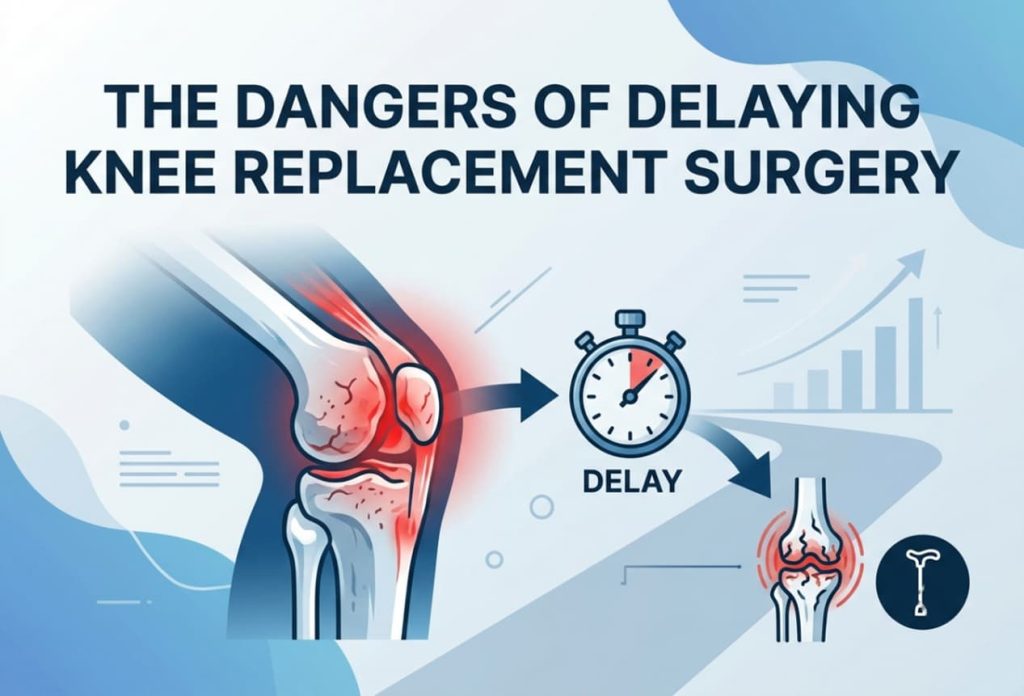
Knee problems are among the most common causes of joint pain and loss of mobility in adults. They may come from osteoarthritis, sports injuries, meniscus tears, ligament damage, rheumatoid arthritis, or gradual cartilage degeneration.
Many studies indicate that knee injuries are among the most frequently reported musculoskeletal injuries. It is estimated that 6,664,324 knee injuries presented to emergency departments in the United States between 1999 and 2008, with an incidence rate of 2.29 per 1,000 people[1]. Another analysis also shows that cases of serious knee injuries among adolescents increased by 26%[2].
Several factors are driving this trend. An aging population means more people are living long enough to develop degenerative joint disease. Rising rates of obesity add mechanical stress to the knee joint, and active lifestyles, while beneficial overall, can contribute to repetitive strain and injury over time.
As the diagnosed knee joint problems remain untreated for an extended period, the patient’s mobility will gradually decline, daily activities will become increasingly difficult, and overall quality of life will also deteriorate.
Timely surgical intervention offers several measurable advantages over waiting, and understanding these benefits helps explain why postponing care carries real consequences.
● Improved mobility and pain relief: Surgery performed before joint damage becomes severe tends to relieve pain more effectively and restore movement for the majority of patients, allowing a return to everyday activities such as walking, climbing stairs, or standing for extended periods.
● Better surgical outcomes and faster recovery: Operating on a joint with less accumulated damage generally allows for a more straightforward procedure, with less need for specialized implants or extensive soft tissue correction, and a shorter path back to normal activity.
● Prevention of joint deformity and muscle loss: Early surgery avoids the asymmetric cartilage wear, and it limits the quadriceps and hamstring weakening that comes from prolonged inactivity. Since quadriceps strength is one of the strongest predictors of post-surgical recovery speed, preserving muscle function in advance matters.
● Reduced risk of complications compared to late-stage surgery: Patients in better physical condition at the time of surgery generally face lower risks related to anesthesia, infection, and blood clots, since prolonged pain and inactivity can weaken overall physical reserve.
● Improved rehabilitation potential and long-term function: Stronger muscles and better bone quality before surgery translate into a stronger foundation for recovery afterward, helping patients reach a higher level of function than they might if surgery were delayed until the joint is severely damaged.
The dangers of delaying knee replacement surgery extend well beyond ongoing discomfort. Osteoarthritis and other degenerative knee conditions do not plateau on their own, so waiting allows a progressive condition to keep progressing while the body adapts in ways that make later treatment more difficult.
| Risk Category | What Happens When Surgery Is Delayed |
| Progressive joint damage | Cartilage loss continues until bone rubs directly against bone, and asymmetric wear can lead to visible leg deformity |
| Chronic pain and reduced quality of life | Pain often worsens over time and may begin to interfere with sleep and routine daily tasks |
| Muscle weakness and mobility loss | Reduced activity from pain avoidance leads to quadriceps and hamstring weakening, which slows recovery once surgery does happen |
| Higher surgical risks later | A more damaged joint and a less conditioned body raise the risk of complications during and after surgery |
| Joint stiffness and scar tissue formation | Prolonged inflammation and inactivity can cause the joint to stiffen, sometimes into a fixed contracture |
| Impact on mental health | Chronic pain and lost independence are associated with increased stress, frustration, and risk of low mood |
| Increased healthcare costs | Ongoing pain management, injections, and physical therapy add up, and later-stage surgery often requires longer hospital stays |
None of these risks occur in isolation. Progressive joint damage leads to muscle weakness, which in turn reduces activity and lowers mood, and each of these factors can make eventual surgery more complex than it would have been earlier. This cumulative pattern is central to understanding the dangers of delaying knee replacement surgery.
When is it too late for knee manipulation or replacement? There is no single fixed deadline, but the window for a straightforward procedure narrows as joint stiffness and scar tissue accumulate. Once a contracture becomes fixed, options like knee manipulation under anesthesia become less effective, and surgery itself becomes more technically demanding. This is one of the reasons that the dangers of delaying knee replacement surgery deserve earlier attention rather than a wait-and-see approach.
At SunMoon, we work with the Peking University International Orthopedics team to provide patients with personalized total knee replacement solutions. Through AI-assisted preoperative planning and 3D-printed patient-specific surgical guides, we are able to develop more precise treatment plans based on each patient’s joint condition, imaging findings, physical health, and rehabilitation goals.
Our knee replacement service focuses not only on the surgery itself, but also on preoperative assessment, postoperative pain management, and rehabilitation support, helping patients restore mobility more safely and smoothly. For patients who have long struggled with knee pain, stiffness, or limited mobility, timely professional assessment can help determine the appropriate surgical timing and treatment plan, preventing the condition from further affecting quality of life.
References: