
When knee pain becomes severe and daily activities are difficult, the total knee replacement surgical procedure may be the next step. For people with end-stage osteoarthritis, rheumatoid arthritis, or serious joint damage, a total knee replacement surgical procedure is often the most effective way to reduce pain and restore function after medication, injections, or physical therapy no longer help.
This article explains what total knee replacement surgery is, how patients prepare for it, what usually happens during the operation, and what recovery often involves. The goal is to help you understand the full total knee replacement surgical procedure in plain language, so you can feel more confident when talking with your doctor.
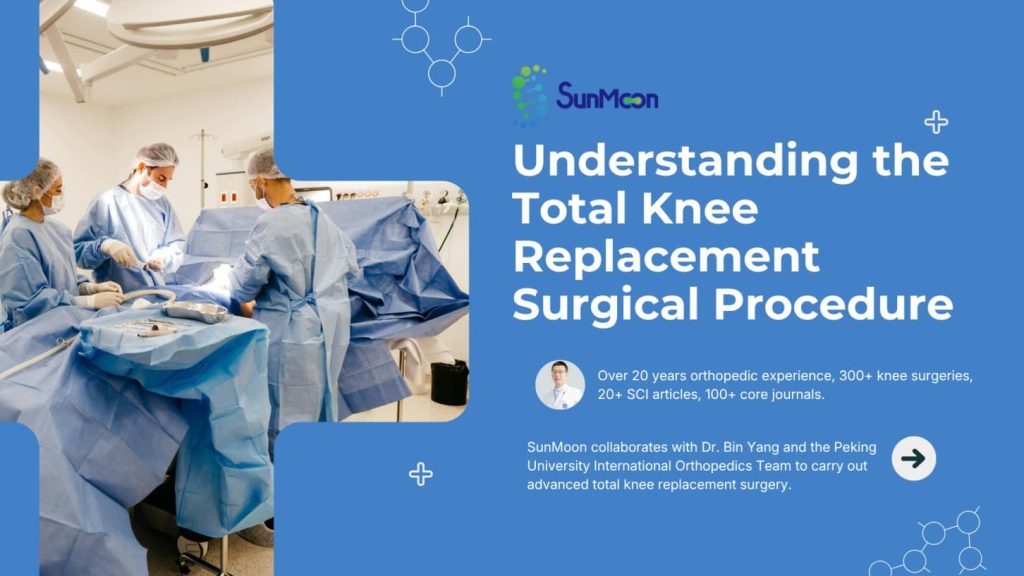
A total knee replacement surgical procedure, also called total knee arthroplasty, replaces damaged joint surfaces in the knee with artificial components made of metal and plastic. The main goals are to reduce pain, improve movement, and help patients return to normal daily activities.
Total knee replacement surgery is commonly recommended when:
Common indications include osteoarthritis, rheumatoid arthritis, and some cases of post-traumatic arthritis or joint damage.
Patients often ask, “How long does a total knee replacement take?” In general, the total knee replacement surgery procedure takes about 1 to 2 hours, although the overall hospital stay is longer due to preparation and recovery time around the operation.
Current practice may use standard instruments, computer-assisted planning, patient-specific instrumentation (PSI), or robotic assistance, depending on the surgeon and hospital. The core total knee replacement surgical procedure remains the same, while newer tools mainly support alignment, planning, and execution.
Explore more: Top 6 New Knee Replacement Surgery Techniques
Before a total knee replacement, patients usually undergo a medical evaluation to confirm that surgery is appropriate and that major health issues are managed as well as possible. This may include a physical examination, blood and urine tests, and other checks based on age and medical history.
Key steps often include:
Many patients are most anxious about the total knee replacement surgical procedure itself. In plain terms, the surgeon removes the worn parts of the knee joint, shapes the bone carefully, places the artificial parts, and checks that the knee moves smoothly before closing the incision.
The total knee replacement surgery procedure is done under anesthesia, so patients do not feel surgical pain during the operation. Depending on the plan, this may involve general anesthesia or a spinal or nerve block approach.
Although details can vary, the broad steps are usually similar:
Patients can benefit from coordinated support before surgery, during hospitalization, and throughout rehabilitation. As a global premium medical service platform, SunMoon helps patients connect with medical teams, arrange treatment or surgery, and better understand each stage of recovery after a total knee replacement surgical procedure.
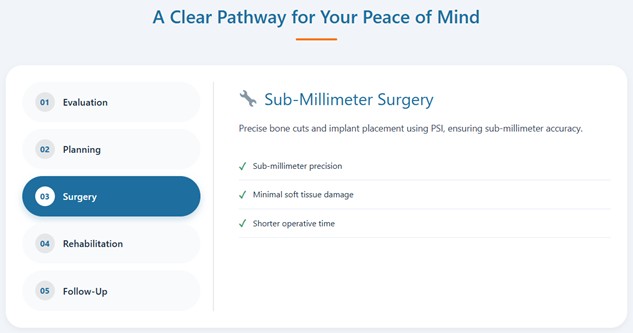
After a total knee replacement surgical procedure, some patients go home the same day, while others stay in the hospital for a short period. Early movement is a routine part of care, and patients are often encouraged to begin ankle movement, standing, and walking with assistance soon after surgery.
Pain control usually involves more than one method. The American Academy of Orthopaedic Surgeons (AAOS) and Enhanced Recovery After Surgery (ERAS)-related guidance support multimodal pain management, which may include combinations of medications and local pain-control techniques to reduce discomfort and limit heavy reliance on opioids.
Recovery is gradual. Many patients regain basic daily function over the following weeks, while strength, confidence, and mobility continue to improve over months. The exact timeline varies with age, baseline function, rehabilitation adherence, and overall health.
Most knee replacements last at least 15 to 20 years, and a high percentage function well at 15 years.
Like any major operation, total knee replacement surgery has risks. Commonly discussed complications include blood clots, infection, stiffness, persistent pain, and implant-related problems over time, although serious complications are uncommon overall.
Risk reduction starts before the operation and continues after it. Careful patient assessment, good surgical planning, infection prevention, early mobilization, and consistent rehabilitation all play an important role in safer recovery after a total knee replacement surgical procedure.
Is Total Knee Replacement Surgery Very Painful?
Some pain is expected after surgery, but pain control is a standard part of treatment, and the surgical pain itself is managed with anesthesia during the operation.
How Long does a Total Knee Replacement Take?
The operation itself usually takes about 1 to 2 hours in many cases.
Will I Need Physical Therapy after a Total Knee Replacement Surgical Procedure?
In most cases, yes. Exercise and guided rehabilitation are standard parts of recovery after total knee arthroplasty.